Oakland Roots SC vs Phoenix Rising FC Tactical Stats Analysis: Why Phoenix Lost Control Despite More Possession
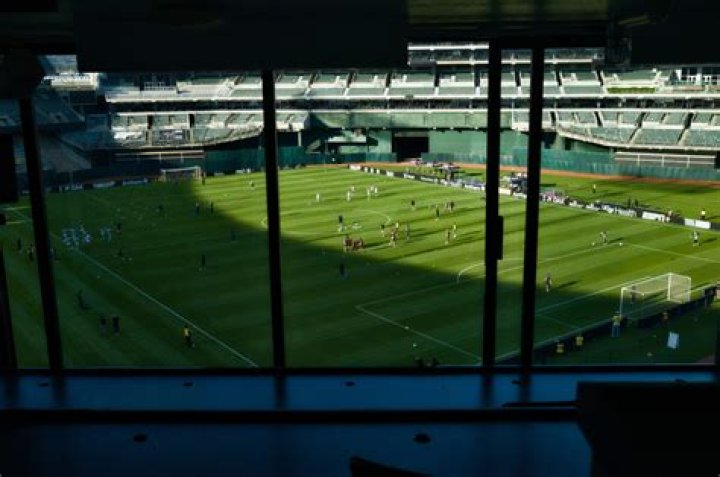
Phoenix Rising FC vs Oakland Roots SC produced the kind of match profile that separates possession from control. Phoenix held more of the ball across the full game, completing 381 accurate passes from 436 attempts and edging possession 52% to 48%, but the territorial and tactical value of that possession collapsed under Oakland’s sharper penalty-box pressure, second-half acceleration, and superior chance quality.
Possession Without Pitch Control
The headline number suggests Phoenix had a platform: 52% possession, 436 passes, and 57 final-third entries. Yet those figures did not translate into command. Oakland, despite making fewer passes overall, created more danger where matches are decided. They finished with 18 total shots to Phoenix’s 14, 9 shots on target to 6, and 14 efforts from inside the box compared with Phoenix’s 8.
That gap reveals the tactical failure. Phoenix circulated the ball well enough to reach advanced zones, but they did not control the most valuable spaces. Oakland’s 27 touches in the opposition penalty area, 5 big chances, and 9 corners showed a team repeatedly forcing the match into high-stress defensive moments. Phoenix had volume in buildup; Oakland had leverage in the box.
First-Half Territory Favoured Phoenix, But Not The Scoreboard Logic
Phoenix’s best spell came before halftime. They controlled 58% possession, attempted 274 passes, and entered the final third 30 times to Oakland’s 18. On paper, that is a territorial advantage. In practice, it was too sterile. Phoenix produced 8 first-half shots but only 1 on target, while Oakland hit the target 3 times from just 5 attempts.
This was the first warning sign. Phoenix were progressing play, but their shot locations and final actions were not clean enough. Oakland, meanwhile, were more economical. They had only 42% of the ball in the first half, yet still created the half’s only big chance and drew 3 fouls in the final third, slowing Phoenix’s rhythm and earning set-piece platforms.
Oakland’s Second-Half Shift Broke Phoenix’s Structure
The match tilted decisively after the interval. Oakland flipped possession to 56%, outshot Phoenix 13-6, generated 4 big chances to Phoenix’s 3, and dominated corner kicks 6-1 in the second half. That was not just more attacking; it was a tactical takeover through pressure and repeat entries.
Phoenix’s defensive line had to absorb too much. Their 30 total clearances, including 19 after halftime, indicate a side defending its own box rather than controlling the pitch. Oakland forced Phoenix into emergency actions, while Phoenix’s second-half passing dropped to 162 total attempts and 125 accurate passes. Once Oakland raised the tempo, Phoenix could no longer use possession as a defensive tool.
The Red Card Changed The Control Equation
Phoenix’s red card further damaged their ability to manage space. Already losing grip in the second half, they became more reactive, posting only 44% possession after halftime and committing 5 fouls. Oakland used the numerical and territorial advantage intelligently, stretching the pitch, winning corners, and increasing inside-box volume to 10 second-half shots from close range.
Duels And Dribbles Exposed The Tactical Contrast
Phoenix actually won the broader duel battle, taking 54% of total duels and 56% of ground duels. Their dribbling efficiency was also superior, completing 5 of 8 dribbles for 63%, compared with Oakland’s 2 of 11. But those numbers were misleading in terms of control. Phoenix won many contests in transition zones; Oakland won the match’s strategic zones.
Oakland’s tackling efficiency was sharper, winning 89% of their tackles overall and 100% in the second half. That allowed them to disrupt Phoenix’s attempts to reset possession and quickly relaunch attacks. Phoenix had more tackles in total, 14 to 9, but that also reflected how often they were forced to chase rather than dictate.
Goalkeeping Numbers Tell The Pressure Story
Phoenix’s goalkeeper made 6 saves, three in each half, while Oakland’s keeper made only 2. That imbalance is one of the clearest indicators of pitch control. A team can pass more, enter the final third more, and still be losing the tactical argument if its goalkeeper is constantly required to solve high-value moments.
Oakland’s 9 shots on target and 5 big chances put Phoenix under continuous penalty-area pressure. Phoenix scored their big chances efficiently, converting 3, but they did not create enough separation from Oakland’s pressure waves. Oakland also missed 2 big chances, which suggests the scoreline could have punished Phoenix’s structural looseness even more severely.
Why Phoenix Failed To Control The Pitch
Phoenix failed because their possession was not connected to suppression. They had the ball, but they did not prevent Oakland from reaching dangerous zones. They had more passes, but fewer shots on target. They had more final-third entries, but fewer corners, fewer big chances, and fewer inside-box shots.
The tactical postmortem is straightforward: Phoenix controlled phases, Oakland controlled pressure. Once Oakland began winning territory after halftime, Phoenix’s midfield could not slow the game, the back line retreated into clearances, and the red card removed the final layer of stability. In modern USL Championship football, possession only matters when it controls space. In this match, Phoenix had the ball often enough, but Oakland owned the areas that decided the game.
